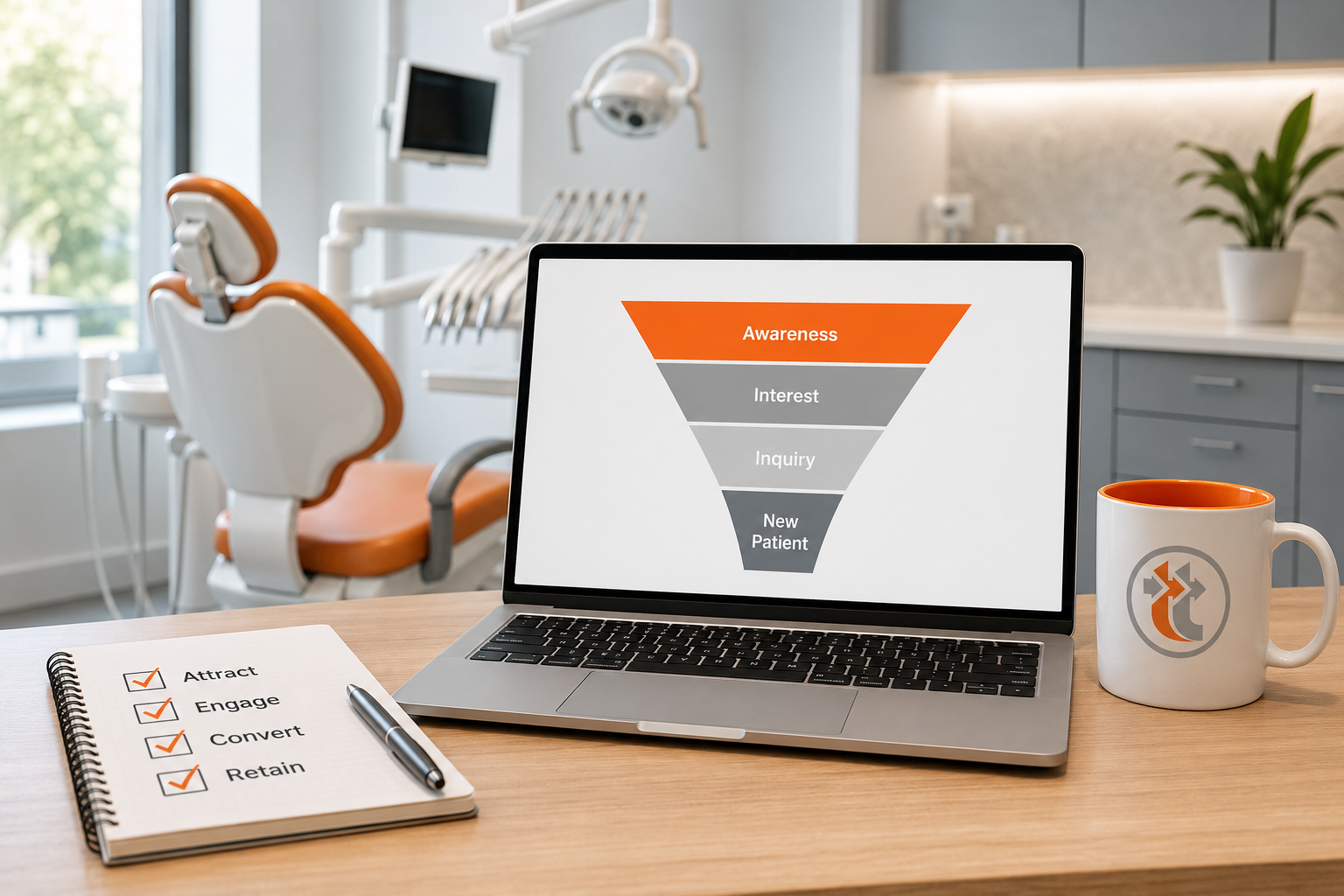
Beyond Dentist Referrals: How Orthodontists Can Build a Predictable Patient Pipeline
Dentist referrals can be a valuable source of orthodontic patients, and strong professional relationships may continue to play an important role in growth.
The challenge is that referral volume remains partly outside the orthodontic practice’s control. A direct-to-patient marketing system gives the practice another source of demand it can influence more directly.
This system does not have to replace referrals. It can complement them by helping parents and adults discover the practice, understand their options, and schedule a consultation directly.
1. Define the Patient Pipeline You Want to Build
Before launching an orthodontic digital marketing strategy, identify the type of growth the practice needs.
Priorities may include:
- More children or teen consultations
- Adult orthodontic patients
- Invisalign or clear aligner cases
- Traditional braces cases
- Growth for a newer location
- Better patient distribution across offices
- More consultations during underused periods
Each objective requires a different audience, message, and offer. Parents researching care for a child may focus on timing, experience, affordability, and convenience. Adults may care more about appearance, treatment flexibility, financing, and how orthodontics fits into work or family life.
The strategy should reflect the decision-maker rather than treating every prospective patient as the same audience.
2. Capture Existing Demand Through Search (SEO)
Some prospective patients are already searching for an orthodontist, braces, clear aligners, or treatment information.
A strong search engine optimization (SEO) strategy may include:
- An accurate Google Business Profile
- A quality, optimized website built for speed
- Consistent location and contact information
- Dedicated treatment pages
- Local content for each office
- Orthodontic SEO
- Google Ads for orthodontists
- Clear consultation calls to action
Google states that complete and accurate Business Profile information makes a business more likely to appear in relevant local results. Google Search campaigns are designed to reach people while they are actively looking for the products or services an advertiser provides.
For a multi-location practice, each office should provide accurate information and a clear patient path. Avoid location pages that simply repeat generic copy. Help visitors understand where the office is, what it offers, and how to schedule.
3. Create Demand Through Education
Not every future orthodontic patient is actively searching today. A parent may notice crowding but not know whether it is time for an evaluation. An adult may dislike their smile but assume treatment is no longer practical. Someone interested in clear aligners may not understand how professional evaluation and ongoing monitoring fit into treatment.
Educational content can help these audiences recognize a need and consider the next step.
Useful topics include:
- Signs a child may benefit from an evaluation
- Differences between braces and clear aligners
- What adults should know before treatment
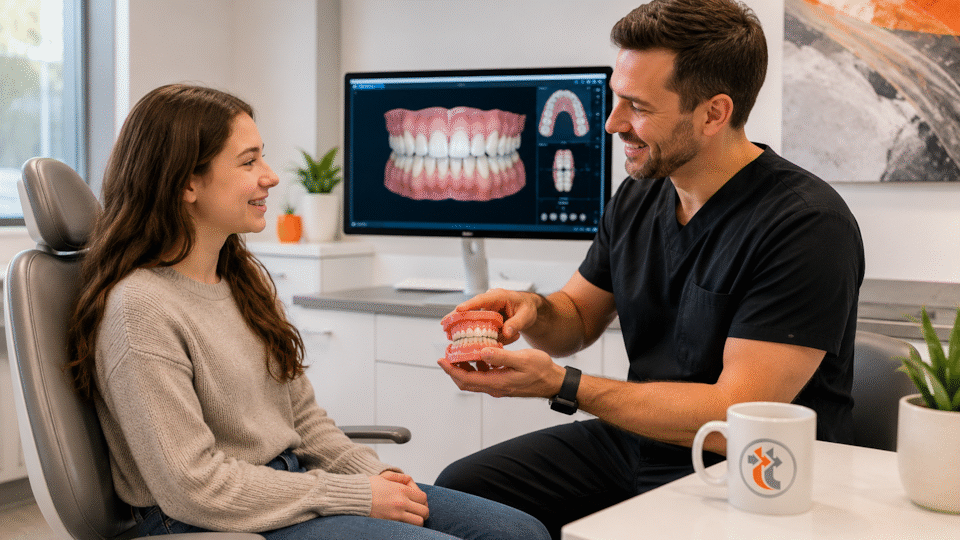
- What happens during the first consultation
- Financing and payment options
- How treatment is planned and monitored
Meta currently offers objectives for awareness, traffic, engagement, and lead generation. Depending on the campaign goal, practices can use video, website visits, forms, calls, or messaging to help people learn more or express interest.
4. Use Different Messages for Different Audiences
A generic “Get a better smile” message is unlikely to address every concern.
Parents and younger patients
Content may focus on timing, confidence, comfort, school schedules, convenience, and what to expect during the consultation process.
Adult patients
Messaging may address appearance, professional confidence, discreet treatment options, scheduling convenience, and flexibility.
Clear aligner candidates
Invisalign marketing should explain candidacy, expectations, professional oversight, and why treatment planning matters.
Braces patients
Braces marketing can address treatment planning, customization, comfort, and options for different age groups.
The goal is not to promise a particular result. It is to make the information more relevant to the person making the decision.
5. Strengthen Trust Before the Consultation
Before scheduling, prospective patients may evaluate:
- The orthodontist’s experience and approach
- Reviews
- Team and office photos
- Treatment explanations
- Before-and-after cases
- Financing information
- Location convenience
- Website usability
The ADA notes that prospective patients use online reviews to evaluate providers and recommends professional dental websites with detailed information about the practice, team, services, and financing.
Videos introducing the orthodontist, explaining treatment, and answering common questions can make the practice feel more familiar before the first visit.
Before using testimonials, patient images, or treatment stories, obtain any required authorization and confirm that the content follows applicable privacy laws, professional rules, advertising standards, and platform policies. Dental advertising claims should be truthful, supportable, and not misleading.
6. Turn Inquiries Into Consultations
Orthodontic lead generation is only useful when inquiries receive a clear and timely response.
Review what happens after someone:
- Calls the office
- Completes a website form
- Submits a social lead form
- Sends a message
- Requests a consultation outside business hours
A simple process should define:
- Who receives the inquiry
- How quickly the practice responds
- How follow-up is documented
- What information staff provide
- How unscheduled prospects are nurtured
- How each source is tracked
The ADA recommends comparing prospective-patient inquiries with scheduled visits because the phone and intake experience can affect conversion.
For a treatment that requires consideration and financial planning, some people may not schedule during the first interaction. Consistent, respectful follow-up can keep the opportunity from being forgotten.
7. Measure the Orthodontic Patient Pipeline
Avoid evaluating campaigns only through impressions, clicks, or raw lead counts.
Track:
- Qualified consultation inquiries
- Cost per qualified inquiry
- Scheduled consultations
- Consultation show rate
- Treatment interest
- Consultation-to-start conversion
- Patient source
- Results by location or service
Attribution will not always be perfect. A patient may see a video, search the practice later, read reviews, and then call. Google Analytics uses attribution models to distribute credit across available touchpoints, but those models remain an interpretation of the data the system can observe.
The purpose of measurement is to identify patterns and improve decisions—not to claim certainty the data cannot provide.
A Direct-to-Patient Growth Checklist
Ask:
- Are we clear about which patients and services we want to grow?
- Can prospective patients find each office locally?
- Do treatment pages answer meaningful questions?
- Is our messaging different for parents and adults?
- Do reviews, videos, and website content support confidence?
- Are inquiries followed up consistently?
- Can we connect consultations and starts to their likely sources?
The weakest stage can limit the entire pipeline.
Build Demand You Can Influence
A strong referral network remains valuable. A direct-to-patient system adds another growth channel the orthodontic practice can influence more directly.
Search visibility captures existing demand. Educational content builds awareness. Advertising expands reach. The website and reputation support evaluation. The consultation process converts interest into treatment opportunities.
Right Tactic, located in Indianapolis, helps orthodontic practices nationwide to connect these stages into a coordinated patient-acquisition system. A strategic review can help identify which part of the pipeline deserves attention first.
Ready to build a more predictable source of orthodontic consultations? Start a conversation with Right Tactic.
- Browse Topics
- All
- Right Tactic News
- Dentist Marketing
- Orthodontist Marketing
- Medical Practice Marketing
- Patient Lead Generation
- Digital Marketing
- Marketing Strategy
- Digital Advertising and PPC
- Social Media Marketing
- Website Design and Development
- Search Engine Optimization (SEO)
- Generative Engine Optimization (GEO)
- Content Marketing
- Video Marketing